
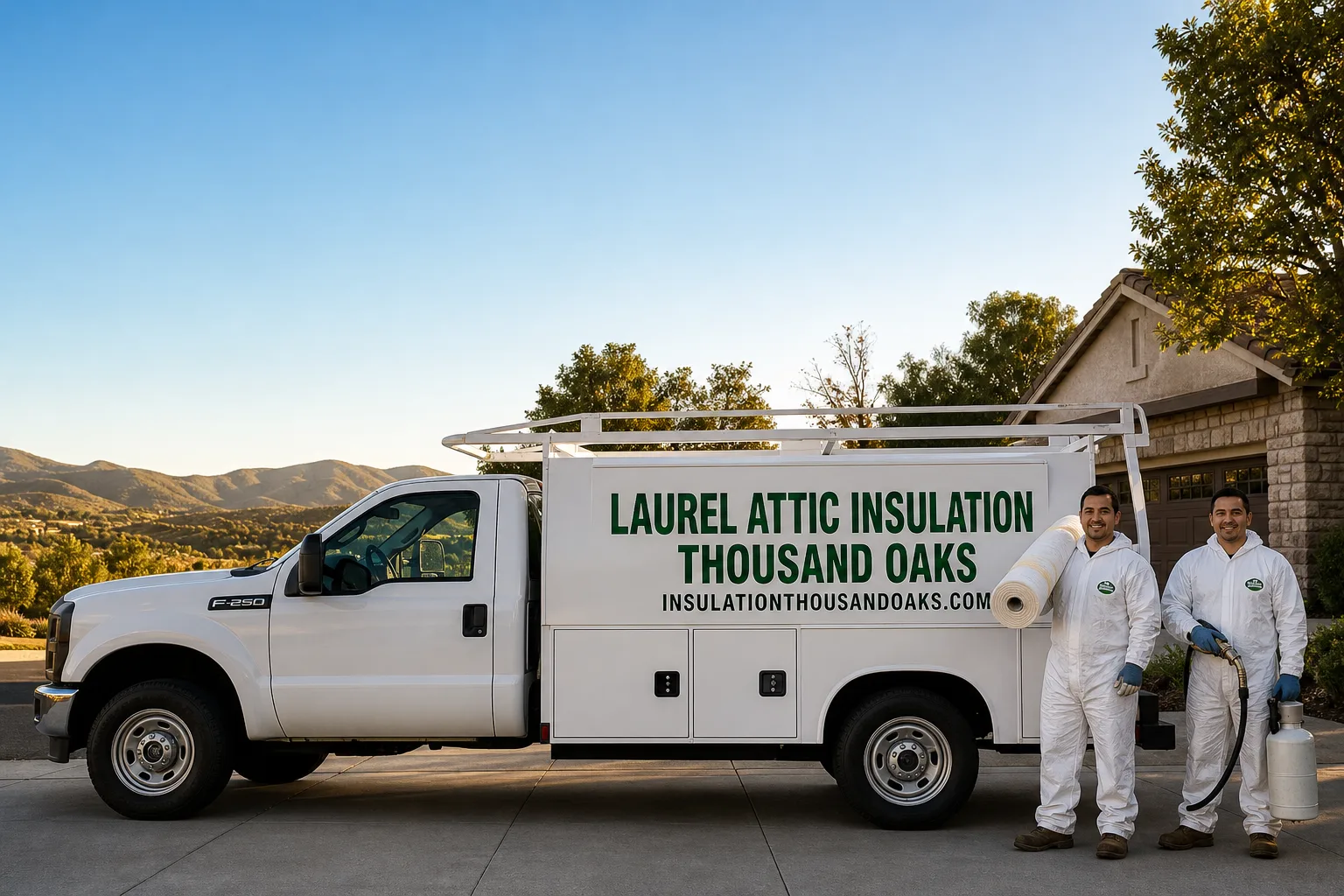
Fast, Reliable Attic Insulation Across Chatsworth
Most attic insulation jobs in Chatsworth run $900 to $2,400, depending on square footage, R-value target, and whether old insulation needs removal first. We get most crews to Chatsworth homes within 24 to 48 hours, often same-week for blown-in jobs. Laurel Attic Insulation Thousand Oaks works across every part of Chatsworth, from the equestrian properties north of the 118 near Santa Susana Pass to the ranch homes off Valley Circle and DeSoto. Call (820) 200-1971 for a written price before anything gets scheduled.
Why Laurel Attic Insulation Thousand Oaks Is Chatsworth’s Preferred Attic Insulation Company
We know what a 1970s Chatsworth ranch attic looks like before we open the hatch. Settled fiberglass batts, exposed ducts, vaulted ceilings that bake all afternoon. That familiarity comes from running Attic Insulation jobs across the Valley for years, and it means our Chatsworth customers aren’t paying us to learn on their roof.
Our crews are background-checked and uniformed, they show up at a live, trackable arrival time, and you get before-and-after photos of the attic when the job is done. That’s the Relay Visibility Guarantee, in writing, on every single project. No vague four-hour windows. No wondering if anyone is actually coming.
For Chatsworth homeowners specifically, the 365-Day Done Right Promise matters. If the insulation doesn’t perform the way we said it would, we make it right within a year. Written on the invoice, not buried in fine print. Chase Whitaker, who leads Laurel Attic Insulation Thousand Oaks, holds every Chatsworth job to that standard. Dispatch and scheduling run through the brand’s Los Angeles office, but the crews are local, and they know the drive up Topanga Canyon or through the 118 corridor like the back of their hand.
Blown In Insulation in Chatsworth
Blown In Insulation is the most common solution we install in Chatsworth attics, especially in 1950s through 1980s ranch homes where original fiberglass batts have compressed to half their rated value. The job involves blowing loose-fill fiberglass or cellulose across the attic floor to a uniform depth that hits the R-value your home needs, typically R-38 in the San Fernando Valley. For a sprawling equestrian property along the northern edge of Chatsworth, that usually runs $1,400 to $2,400. For the average 1,200 to 1,500 square foot ranch, plan on $900 to $1,600.
Blown-in works particularly well in Chatsworth homes because it fills the gaps and voids that batts never fully cover, especially around cross-bracing, recessed lights, and the irregular joist spacing common in older custom builds.
Air Sealing Before the Blow
Before we blow anything in, we air-seal the attic floor. Top plates, wire penetrations, recessed can lights, plumbing chases. In Chatsworth’s dry, hot climate, those tiny gaps pull conditioned air out of your living space and pull 130°F attic air in. Sealing them first is what separates a real insulation job from just dumping fiberglass.
Radiant Barrier for Valley Heat
Chatsworth summers regularly push past 100°F, and radiant heat through the roof deck is a huge part of the cooling load. We often recommend adding a radiant barrier to the underside of the roof deck on south-facing roofs. It reflects heat before it ever reaches your insulation. For vaulted ceilings, this is often the single highest-impact upgrade available.
Insulation Contractors in Chatsworth
Insulation Contractors in Chatsworth are not all the same, and the difference shows up fast in an older attic. What separates a real crew from a fly-by-night outfit is whether they’ll put a price in writing before the blower fires up, whether they’ll show you photos of the finished attic, and whether there’s a remedy if something isn’t right. That’s where we stand: written price first, photo proof at the end, and a 365-day fix-it promise. Most Chatsworth projects wrap in one day, and the crew leaves the attic cleaner than they found it.
What to Ask Any Chatsworth Contractor
Ask for the target R-value in writing. Ask if they air-seal before insulating. Ask whether they’ll handle baffle installation at the eaves so soffit vents stay unblocked. If a contractor can’t answer those three questions directly, call someone else. We answer them on the phone before we ever schedule a visit.
Retrofitting Legacy Homes on Equestrian Lots
Chatsworth’s equestrian properties along the base of the Santa Susana Mountains often have large footprints, vaulted ceilings, and original insulation that was minimal to begin with. Retrofitting these homes usually means a combination of air sealing, blown-in insulation to current code, and sometimes spray foam for the vaulted sections. We’ve done enough of these to know that no two attics are the same, and a written plan matters more here than anywhere.
Trusted Brands We Service in Chatsworth
We install and service materials from Owens Corning, Johns Manville, GreenFiber, and Demilec, among others. For blown-in jobs in Chatsworth, Owens Corning AttiCat fiberglass is a workhorse: consistent density, clean install, reliable R-value per inch. For homes that want cellulose, GreenFiber is a solid choice, particularly where attic floor irregularity makes fiberglass harder to hit a uniform depth. Spray foam jobs lean Demilec, especially on vaulted ceilings and knee walls. We match material to the job, not to whatever is left on the truck.
Common Attic Insulation Problems We See in Chatsworth Homes
- Settled fiberglass batts in 1950s-1980s ranches. The original R-19 or R-22 batts compress over time. We routinely find attics where the actual effective value is R-9 to R-11, which barely slows Valley heat.
- Sweating exposed ducts near Santa Susana Pass. In the equestrian neighborhoods along the northern edge of Chatsworth, exposed ductwork in unconditioned attics is common. When insulation degrades, warm attic air hits cool duct surfaces and condensation forms, staining drywall and wasting energy.
- Vaulted ceiling hot zones. Ranch homes with vaulted ceilings create uneven thermal envelopes. The vaulted sections lose heat faster, rooms under them run 5 to 8 degrees warmer, and the AC never cycles off.
- Blocked or missing baffles at the eaves. Older Chatsworth homes often have soffit vents that are blocked by original batts or never had baffles installed at all. Ventilation stalls, attic temps spike, and the insulation works against you.
Pricing for Attic Insulation in Chatsworth, CA
Here’s what Chatsworth homeowners can expect to pay with Laurel. Blown-in insulation: $900 to $2,400. Batt insulation replacement: $800 to $1,800. Full removal plus new blown-in: $1,600 to $3,200. Top-up over existing insulation: $600 to $1,300. Baffle and ventilation prep: $300 to $700, depending on attic size. Square footage and current R-value drive the final number, and every quote is written before work starts. No door-step adjustments. Call (820) 200-1971 for a free estimate.
We Also Serve Cities Near Chatsworth
If you’re just outside Chatsworth, we run insulation jobs throughout Chatsworth and into Canoga Park, West Hills, Calabasas, and Topanga regularly. Same written pricing, same live arrival tracking, same crew standards. If you’re anywhere along the 118 corridor or up against the Santa Susana foothills, odds are we’re in your neighborhood every week.
Serving Chatsworth, CA - Our Local Coverage Area
We’re based in the Chatsworth area and know this community well. Use the map below to see our service coverage - if you’re nearby, we can almost certainly help.
FAQs About Attic Insulation in Chatsworth
Exposed ductwork in unconditioned attics sweats when attic air is hot and ducts are cold, and degraded insulation makes the problem dramatically worse because the attic itself runs hotter. Proper air sealing and R-38 attic insulation drop attic temperatures enough to stop summer condensation. We’ve seen this fix resolve moisture staining in a single season. Call (820) 200-1971 for an attic assessment.
Most 1970s Chatsworth ranch attics were insulated to R-19 or R-22 when built, but settlement and compression typically leave an effective R-9 to R-13 today. Current building guidance for the Valley is R-38, which means these homes are running at roughly a third of where they should be. We measure what’s actually there before quoting anything.
Yes, vaulted ceilings reduce insulation effectiveness because the thermal boundary follows the roofline, not a flat attic floor. That leaves less space for insulation depth and creates direct heat transfer through the roof deck. The fix usually involves spray foam on the vaulted sections combined with a radiant barrier. Get a written plan before touching anything.
Summer condensation on Chatsworth attic ducts happens because the temperature difference between cold duct surfaces and 120°F+ attic air is highest during heat waves. In winter the gap is smaller, so you don’t see it. The upstream cause is almost always under-insulated attics and poor ventilation on 1950s-1980s homes. We address both, not just the symptom.
No, you shouldn’t reuse old 1980s fiberglass batts. They’ve settled, they’re often full of dust and rodent debris, and their rated R-value is gone. We recommend removal and a clean blown-in installation to R-38. Reusing degraded batts under new insulation simply locks in the problem you’re paying to fix.
If your Chatsworth attic is running hot, your ducts are sweating, or your AC never seems to cycle off, call Laurel Attic Insulation Thousand Oaks at (820) 200-1971. We’ll measure what’s up there, write you a firm price, and get the job done right. Free estimates, no pressure, and everything in writing.
Written by Chase Whitaker, Owner at Laurel Attic Insulation Thousand Oaks, serving Chatsworth and the San Fernando Valley.