
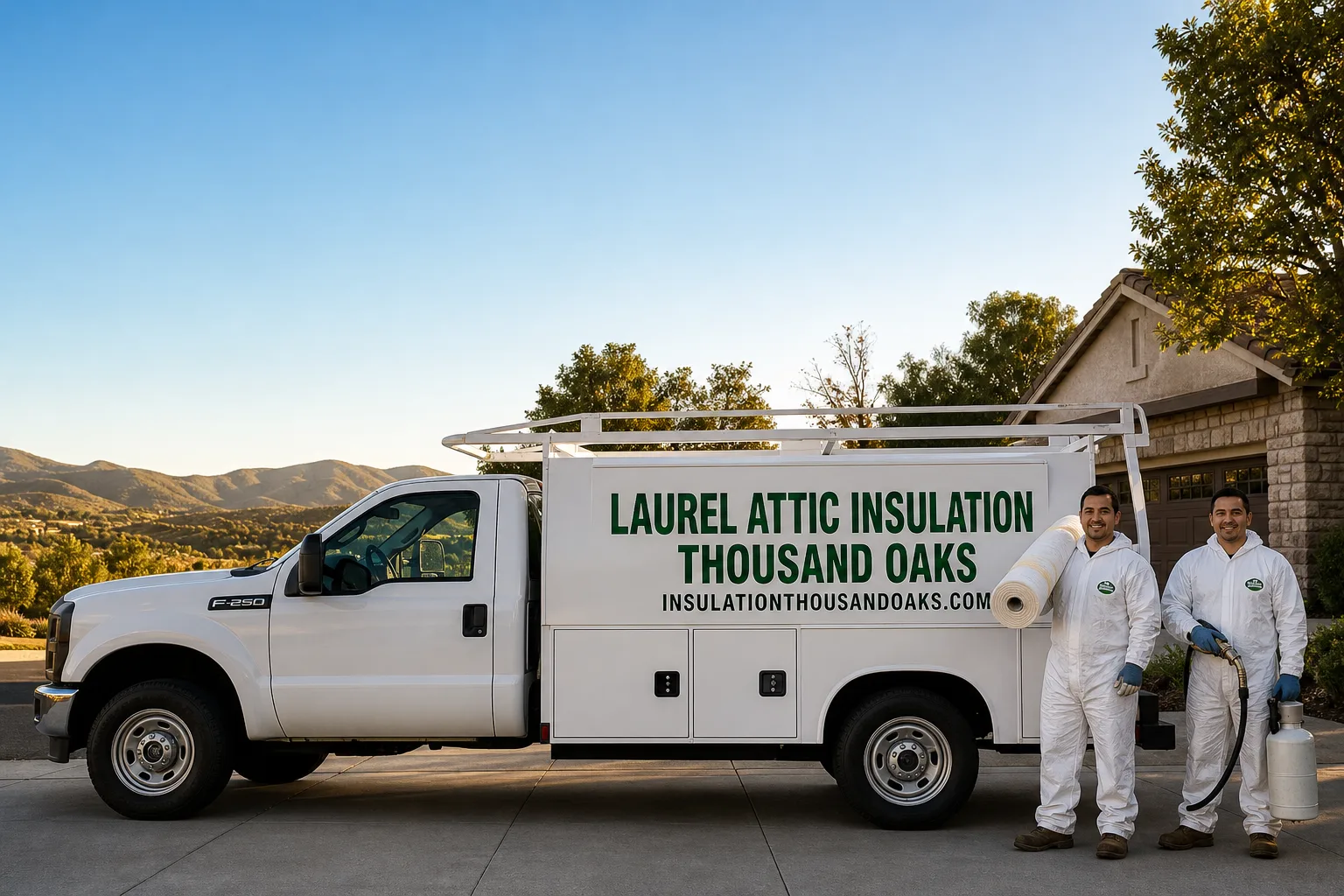
Fast, Reliable Spray Foam Insulation Across Simi Valley
Spray foam insulation in Simi Valley costs $2,800 to $7,200 for a typical attic or rim joist project, with most jobs completed in one day. The bigger question for this area isn’t cost alone. It’s whether the foam actually stops the wind that funnels through the Santa Susana Pass. That’s where most generic insulation setups fail, and it’s exactly what we build for. Call (820) 200-1971 and we’ll give you a written price before anything starts.
Our crews know the difference between a Big Sky tract home and an Indian Hills property with cathedral ceilings. Different framing, different access, different air leakage patterns. That local knowledge changes how we approach every Simi Valley job, and it’s why homeowners here call Laurel Attic Insulation Thousand Oaks instead of rolling the dice with an out-of-area crew.
Why Laurel Attic Insulation Thousand Oaks Is Simi Valley’s Preferred Spray Foam Insulation Company
Simi Valley homeowners deal with a specific set of problems. Wind-driven dust through soffit gaps. Attic temperatures that hit 140 degrees in August. Rodents chewing through old fiberglass batts in raised foundation homes off Erringer Road. When you call us, the person on the phone knows those streets. We’re backed by the Relay Home Co. family, founded in 2003, and we bring the Relay Visibility Guarantee to every job in Simi Valley: live technician tracking, before-and-after photos, and a written price delivered before the first can of foam is opened.
Chase Whitaker leads our team, and he’s built a crew that actually answers the phone. 24/7, a live person picks up. No voicemail, no callback queue. When you’re dealing with a hot attic in mid-July off Madera Road, that matters. Every Simi Valley job includes our 365-Day Done Right Promise in writing. If the foam doesn’t perform, we return and fix it. Free second visit if the repair fails, no argument. That’s the standard, and it’s on paper for every homeowner from Sycamore Canyon Drive to the flats near Tapo Street.
Our reviews from Simi Valley customers consistently mention two things: the technician arrived when the app said they would, and the final price matched the written quote. Neither should be remarkable. In this trade, both are. We’re happy to be the exception.
Closed Cell Spray Foam Insulation in Simi Valley
Closed Cell Spray Foam Insulation is the right call for most Simi Valley homeowners dealing with wind-driven air intrusion and moisture concerns. This foam cures rigid at about 1.9 to 2.1 pounds per cubic foot, creating an air barrier and a vapor barrier in one pass. In a 1972 ranch near Sequoia Avenue, that means the Santa Ana gusts bouncing off the hills can’t push attic air through the top plates into the living room. Expect to pay $3,800 to $7,200 for a standard attic application in Simi Valley, depending on square footage and the depth needed to hit code-level R-value.
When Closed Cell Makes Sense
Raised foundations and cathedral ceilings benefit most. Closed cell adds structural rigidity, which matters in wind-exposed tracts near the 118. It also blocks moisture migration, a real concern during Simi Valley’s winter freeze-thaw cycles when warm interior air hits cold roof sheathing.
What to Watch For
Closed cell applied over unsealed recessed can lights or around leaky top plates defeats the purpose. The foam performs, but the air finds a different path. Our technicians seal those bypasses first. That sequencing is the difference between a job that tests well and one that actually performs when the wind picks up.
Open Cell Spray Foam in Simi Valley
Open Cell Spray Foam runs roughly $2,800 to $5,100 for a typical Simi Valley attic and works well when the priority is thermal performance and sound control rather than moisture blocking. This foam cures soft and expands to fill framing cavities completely, creating an excellent air barrier in vented attics where wind-driven dust from the Santa Susana Pass is the main complaint. It’s a strong fit for interior wall cavities and garage ceilings off Cochran Street where homeowners want to quiet street noise from the boulevard.
When Open Cell Fits the Job
For vented attics with adequate soffit and ridge ventilation, open cell delivers strong R-value per dollar. It also dampens sound, a real benefit in neighborhoods backing up to the 118. But open cell can’t block wind-driven air through soffit gaps the way closed cell can. In exposed tracts like the hillside homes north of Royal Avenue, we often recommend closed cell at the roofline instead.
Where Open Cell Underperforms
Under a raised foundation, open cell is the wrong tool. Simi Valley’s dry, dusty Santa Ana conditions mean open cell under the floor can trap moisture against the subfloor during winter freezes while failing to stop dust intrusion from crawlspace vents. Closed cell or a hybrid approach wins there every time.
Trusted Brands We Service in Simi Valley
We stock materials from Owens Corning, Johns Manville, and Demilec for our Simi Valley jobs, matched to the specific failure mode we’re fixing rather than whatever is on the truck. Demilec closed cell is our go-to for wind-exposed attics and cathedral ceiling applications in the Indian Hills tract. Owens Corning open cell handles standard vented attics and interior walls with solid thermal performance. We keep local inventory ready so a Simi Valley homeowner can get same-week service without waiting on a regional shipment. If you need Spray Foam Insulation that’s spec’d for this specific climate, call us and we’ll explain which material makes sense for your house.
Common Spray Foam Insulation Problems We See in Simi Valley Homes
- Wind-driven air bypassing open cell in vented attics. Santa Ana gusts force dust and heat through soffit gaps, and open cell alone can’t stop it. We see this constantly in homes along the hillside corridors where wind funnels through the pass.
- Unsealed can lights and top plates defeating closed cell. The foam tests fine, but homeowners still feel cold spots in January. The air moved around the foam. Proper sealing before application fixes it.
- Cathedral ceiling moisture trapping. Spray foam on a cathedral ceiling with no exterior venting can trap moisture behind the foam during Simi Valley’s winter freeze-thaw cycles. That leads to rot at the ridge, a repair no one wants to fund.
- Rodent-damaged fiberglass in raised foundation homes. The 1960s-1980s stock off Los Angeles Avenue frequently has original batts chewed apart by rats in the crawlspace. Spray foam seals the entry points and replaces the insulating value in one step.
Pricing for Spray Foam Insulation in Simi Valley, CA
Most closed cell attic jobs in Simi Valley run $3,800 to $7,200. Open cell attics land between $2,800 and $5,100. Rim joist spray foam in raised foundation homes costs $1,400 to $2,700 depending on linear footage and access. Garage ceiling applications run $1,200 to $2,400 for a standard two-car garage. The variables are square footage, R-value target, and whether we’re sealing bypasses or working around existing insulation. We give you a written price before work starts, every time. No door-step changes. Call (820) 200-1971 for a free estimate on your specific project.
One note on Simi Valley specifically: homes in wind-exposed tracts near the Santa Susana Pass often need more air-sealing prep work than a comparable house in Thousand Oaks or Moorpark. That prep is line-itemed on your quote. You’ll see exactly what you’re paying for and why.
We Also Serve Cities Near Simi Valley
Our crews cover Moorpark, Oak Park, Thousand Oaks, and Westlake Village with the same written pricing and same-day response times. If you’re in a neighboring city and need spray foam insulation, check out our Simi Valley page for local detail, or call us and we’ll route a crew to you. We coordinate dispatch from our Los Angeles office, but the technicians working your job are local to this area and know these streets.
Serving Simi Valley, CA - Our Local Coverage Area
We’re based in the Simi Valley area and know this community well. Use the map below to see our service coverage - if you’re nearby, we can almost certainly help.
FAQs About Spray Foam Insulation in Simi Valley
Closed-cell spray foam blocks air movement at the point of entry, which batt insulation cannot do. In Simi Valley, where Santa Ana winds drive exterior air through soffit gaps, top plates, and exterior wall penetrations, this air-sealing matters more than the R-value itself. Batt insulation filters air; foam seals the gaps. The difference is measurable in dust buildup and winter cold spots. If your home sits in a wind-exposed tract, closed cell is worth the higher cost. Call (820) 200-1971 and we’ll assess your specific exposure.
Closed-cell spray foam applied from the exterior via strategic stucco cuts is the most effective approach we use in Indian Hills. The foam goes directly against the roof deck, creating an air and vapor barrier without needing interior access. We then patch the stucco and add a radiant barrier under the roof sheathing. The result is a sealed thermal envelope without ripping out drywall. This is exactly what we did on a 1972 stucco home in that tract, and it cut the homeowner’s summer cooling load by nearly 20 percent.
Open-cell spray foam is generally the wrong choice under a raised foundation in Simi Valley. The foam can trap moisture against the subfloor during winter freeze-thaw cycles, and it doesn’t stop wind-driven dust from entering through crawlspace vents. Closed cell or a hybrid approach with rigid board works better. We’ll specify the right material for your crawlspace conditions on the written quote. Estimates are free.
Spray foam seals the entry points rodents use, which is a more durable fix than traps or poison alone. In Simi Valley homes with raised foundations, rats typically enter through gaps around plumbing penetrations, soffit edges, and crawlspace vents. Closed cell foam blocks those openings and replaces the damaged fiberglass in the same pass. We see this pattern constantly in 1960s-1980s stock throughout the valley. It works.
Spray foam reduces air movement through the attic, but a radiant barrier adds a second layer of defense against radiant heat gain from the sun. In Simi Valley’s July and August heat, a radiant barrier under the roof sheathing can reduce attic temperatures by 20 to 30 degrees, cutting the cooling load on your HVAC. We often recommend both for cathedral ceilings and wind-exposed rooflines, especially where the attic can’t be vented properly. Call us for a specific recommendation on your roofline.
Get Your Simi Valley Spray Foam Insulation Quote Today
Wind-driven air intrusion, dust, heat, rodent damage: these are the realities of owning a 1960s-1980s home in Simi Valley. We fix them with the right foam for the right job, a written price before anything starts, and a crew that actually shows up on time. Call (820) 200-1971 and let’s talk about your attic. The estimate is free, and you’ll know exactly what you’re paying before we touch your house.
Written by Chase Whitaker, Owner at Laurel Attic Insulation Thousand Oaks, serving Simi Valley with spray foam insulation, air sealing, and energy retrofits.