
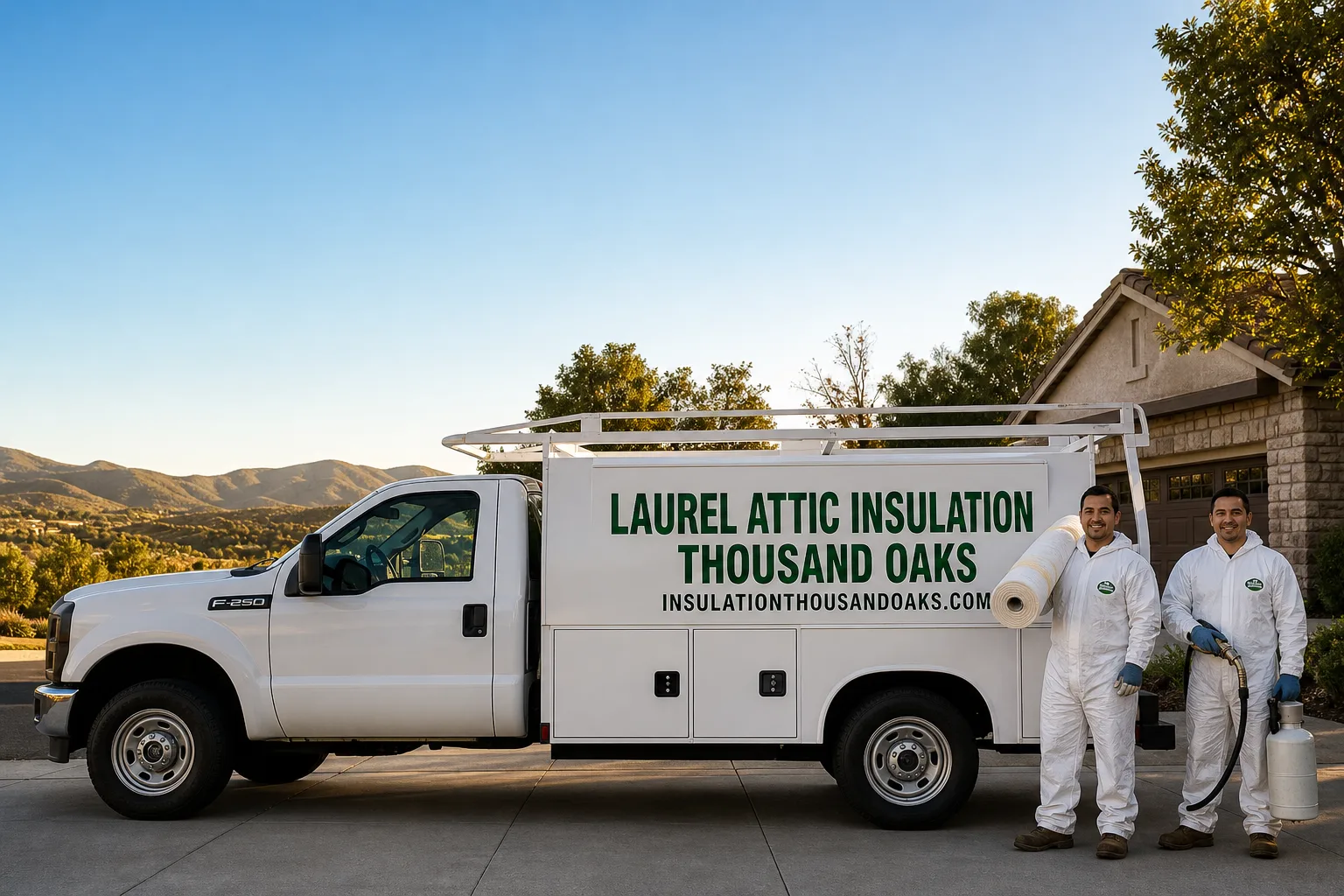
Fast, Reliable Attic Insulation Across Malibu
Attic insulation in Malibu isn’t a one-size-fits-all job. On a canyon home in Malibu Park, it’s about meeting WUI fire code. On a 1963 beach bungalow off Latigo Canyon Road, it’s about salt air and compacted fiberglass that stopped working years ago. Laurel Attic Insulation, part of the Relay Home Co. family, sends background-checked, uniformed technicians to Malibu with a live arrival time, a written price before any work starts, and photo proof of every job. Call us at (820) 200-1971 and we’ll tell you exactly what your attic needs and what it costs. No four-hour windows. No door-step surprises.
Why Laurel Attic Insulation Thousand Oaks Is Malibu’s Preferred Attic Insulation Company
We’re not new to Malibu’s building quirks. We’ve worked on mid-century canyon homes with zero attic access, on glass-and-steel rebuilds in Point Dume where the architect spec’d mineral wool, and on beach bungalows where salt fog had turned old batts into damp, useless mats. That local pattern recognition means we don’t show up guessing. We show up knowing what to look for.
Our crews coordinate from the brand’s Los Angeles office and serve Malibu locally, so when you book Attic Insulation with us, you get a live trackable arrival time, not a vague window. Every job is led by Chase Whitaker, who built our process around one thing: homeowners should see everything in writing before a single staple is set. That’s the Relay Standard. Book in a tap, get a live arrival time, receive before-and-after photos, pay from the link. It’s how insulation should have always worked.
We hold ourselves to the 365-Day Done Right Promise. If it’s not right, we make it right, in writing, on every job. No argument. No charge. And if a repair fails, the second visit is free. That’s a specific promise, not a slogan.
Insulation Contractors in Malibu
Insulation Contractors in Malibu don’t just install fluff and leave. The job here means assessing what’s already in the attic, what’s degraded, what’s code-compliant, and what’s actually protecting the home from heat, moisture, and embers. You need this work if your home was built before 1980, if your energy bills have crept up while comfort dropped, or if you’ve never looked at your attic since you bought the place. Most attic insulation jobs in Malibu run $900 – $2,400, depending on square footage and R-value needed. Top-ups on smaller attics start lower; full replacements on large canyon homes go higher.
WUI-Compliant Insulation Upgrades
After the Woolsey Fire, Malibu enforced WUI code requiring noncombustible attic insulation like mineral wool in Point Dume and Malibu Park rebuilds. Our crews install Rockwool Comfortbatt and similar noncombustible products that meet these requirements. If your home falls in a WUI zone, we’ll tell you what the code says and what your existing insulation situation means for compliance.
Air Sealing Before Insulation
Insulation without air sealing is half a job. In Malibu homes, unsealed can lights and bath fans pull moist, salty air into the attic, which leads to mold on insulation facing and rusted fasteners. We seal top plates, penetrations, and fixture gaps before we add or replace insulation. It’s the difference between an attic that works and one that just looks full.
Attic Ventilation in Malibu
Attic Ventilation in Malibu is a life-or-death detail for insulation performance. A vented attic with poor airflow traps moisture in winter and cooks the house in summer. Salt-laden fog drifting in from the coast turns poorly ventilated attics into damp boxes where fiberglass clumps and loses R-value within 10 – 15 years. Proper ventilation – soffit-to-ridge airflow, a solar-powered fan where the roof pitch allows – keeps the insulation dry and performing. Typical attic ventilation work in Malibu runs $500 – $1,800, depending on whether we’re adding vents, fixing baffles, or installing powered fans.
Santa Ana Season Vent Screening
Santa Ana wind-driven embers enter through unscreened gable vents and ignite dusty, combustible insulation in pre-WUI homes. The fix isn’t complicated: install ember-resistant vent screens, clear debris, and upgrade insulation in exposed areas. We do this as part of our attic ventilation work on every Malibu job where the home predates modern WUI standards.
Condensation Control for Beachside Attics
On a 1963 beach bungalow off Latigo Canyon Road, our crew found fiberglass batts that had compacted to R-11 and were wicking salt moisture at the eaves. We air-sealed all top plates, replaced with Rockwool Comfortbatt R-30, and added a solar-powered attic fan to stop winter condensation before it reached the new insulation. That’s the pattern: moisture gets in, insulation fails, and ventilation is what breaks the cycle.
If you’re dealing with damp insulation or rusted fasteners in your attic, call Laurel Attic Insulation at (820) 200-1971. We’ll assess what’s happening and put the fix in writing before we start.
Trusted Brands We Service in Malibu
We stock materials from eight leading manufacturers and match the product to the job, not to whatever’s on the truck. For Malibu’s WUI zones, we lean on Rockwool and Owens Corning mineral wool and fire-resistant products. For beach bungalows and standard canyon homes, GreenFiber and Johns Manville give us dependable, high-R-value options. We keep a local parts inventory for Malibu customers so turnaround stays fast. If you need insulation this week, we’re not waiting on a distributor across town.
Common Attic Insulation Problems We See in Malibu Homes
- Salt-fog degradation in beachside attics. Fiberglass batts near Point Dume and Zuma Beach wick moisture from salt air and collapse, dropping from R-30 to R-11 or lower over 10 – 15 years. Homeowners notice higher bills and uneven room temperatures long before they see the attic.
- Ember intrusion in pre-WUI canyon homes. Unscreened gable vents on older homes in Malibu Canyon and Latigo Canyon let Santa Ana wind-driven embers reach dusty, combustible insulation. This is a fire hazard that standard insulation work doesn’t address unless the contractor knows to look.
- Mold and rust from unsealed penetrations. Can lights, bath fans, and plumbing vents in 1950s-60s homes pull salty, humid air into the attic. The result is mold on insulation facing and corroded fasteners, which quietly reduces insulation life and can spread into framing.
- Compacted insulation in low-clearance attics. Mid-century beach bungalows and hillside terraced homes often have tight attics where old batts have been walked on, shoved aside, or never laid correctly. We remove, air-seal, and re-insulate to the right R-value for the space.
Pricing for Attic Insulation in Malibu, CA
Honest numbers, because that’s what you need. A standard blown-in attic top-up in Malibu runs $900 – $1,800 for a typical 1,000 – 1,500 sq ft attic. Full removal and replacement of degraded insulation runs $1,800 – $4,000, depending on attic size, access, and disposal. Noncombustible mineral wool installation for WUI compliance runs $2,400 – $6,500 on larger luxury builds. Attic ventilation add-ons range $500 – $1,800. Every quote is a written price before work starts. Every job includes the 365-Day Done Right Promise. Call (820) 200-1971 for a free estimate, and we’ll walk your attic with you on a video call if you want to see what we see.
We Also Serve Cities Near Malibu
Our Malibu crews also cover Attic Insulation in Malibu and the surrounding communities: Agoura Hills, Westlake Village, Thousand Oaks, and Calabasas. Wherever you are in this stretch of Los Angeles County, you get the same live tracking, written pricing, and 365-day guarantee. Call (820) 200-1971 and we’ll route the nearest crew to your door.
Serving Malibu, CA - Our Local Coverage Area
We’re based in the Malibu area and know this community well. Use the map below to see our service coverage - if you’re nearby, we can almost certainly help.
FAQs About Attic Insulation in Malibu
No, a bathroom remodel alone does not trigger a full attic insulation replacement under Malibu’s WUI code. The noncombustible insulation requirement applies to new construction and major rebuilds in designated WUI zones, like parts of Point Dume and Malibu Park. However, if your remodel involves opening attic space, adding recessed lights, or moving bath fans, we recommend air-sealing and checking your existing insulation while things are open. A small project is a cheap time to fix what’s failing. Call (820) 200-1971 and we’ll tell you what your specific remodel triggers.
Every 3 to 5 years if you’re within a mile of the coast. Salt fog and humidity break down fiberglass faster than homeowners expect. We see batts that have lost half their R-value within a decade in Zuma Beach and Point Dume homes. Signs of trouble: visible clumping, damp spots near eaves, rusted fasteners, or a musty smell when you open the attic hatch. If you haven’t looked in 5 years, it’s time. Call (820) 200-1971 and we can put you on a simple inspection schedule.
Yes, in most cases you can add mineral wool over existing fiberglass, but only if the old insulation is dry, structurally sound, and not compromised by salt or mold. In WUI rebuilds where code requires noncombustible attic insulation, adding Rockwool over older fiberglass can work if the existing layer hasn’t degraded. If the old fiberglass is damp or compacted, pulling it out first is the right call. We’ll assess what’s actually up there and give you a written recommendation. Call (820) 200-1971 for a free look.
It depends on the type of spray foam and where it’s applied. Closed-cell spray foam on the roofline creates an unvented attic, which doesn’t rely on traditional soffit-to-ridge airflow. But that means the attic must be fully sealed and the foam must be properly installed. Open-cell or partial spray foam jobs still need ventilation. In Malibu’s coastal humidity, getting this wrong leads to condensation and rot. We’ll tell you exactly what your setup requires. Call (820) 200-1971 and ask for Chase Whitaker’s team.
Blown-in cellulose (we use GreenFiber) or mineral wool batts are usually the best fit for older bungalows without a proper attic floor. These homes often have low-clearance, irregular attic spaces where rigid batts are hard to place correctly. Blown-in cellulose fills gaps air sealing can’t fully close, while Rockwool batts give you fire resistance and moisture control. Both outperform the compacted R-11 fiberglass we typically find in those homes. Call (820) 200-1971 and we’ll inspect what you have now.
Written by Chase Whitaker, Owner at Laurel Attic Insulation, serving Malibu with modern tools, honest pricing, and the 365-Day Done Right Promise.